Having spoken about the triangle (the first two-dimensional figure) in the previous article, it feels appropriate to take a step back and outline the facts about the line. With this gesture, I connect the dot, the circle, and the triangle into a single sequence.
Facts About the Line:
• A line is formed when a dot begins to move
• A line can represent finite motion (a segment) or infinite motion (a line / a ray)
• A line is an object of the first dimension (it has length only)
• A line arises from two principles: a passive (static) one and an active (moving) one
• A line gives rise to basic two-dimensional forms from which structure begins: the circle, the equilateral triangle, and the square
Building on the last point, the circle is the first form created by a dot in motion.
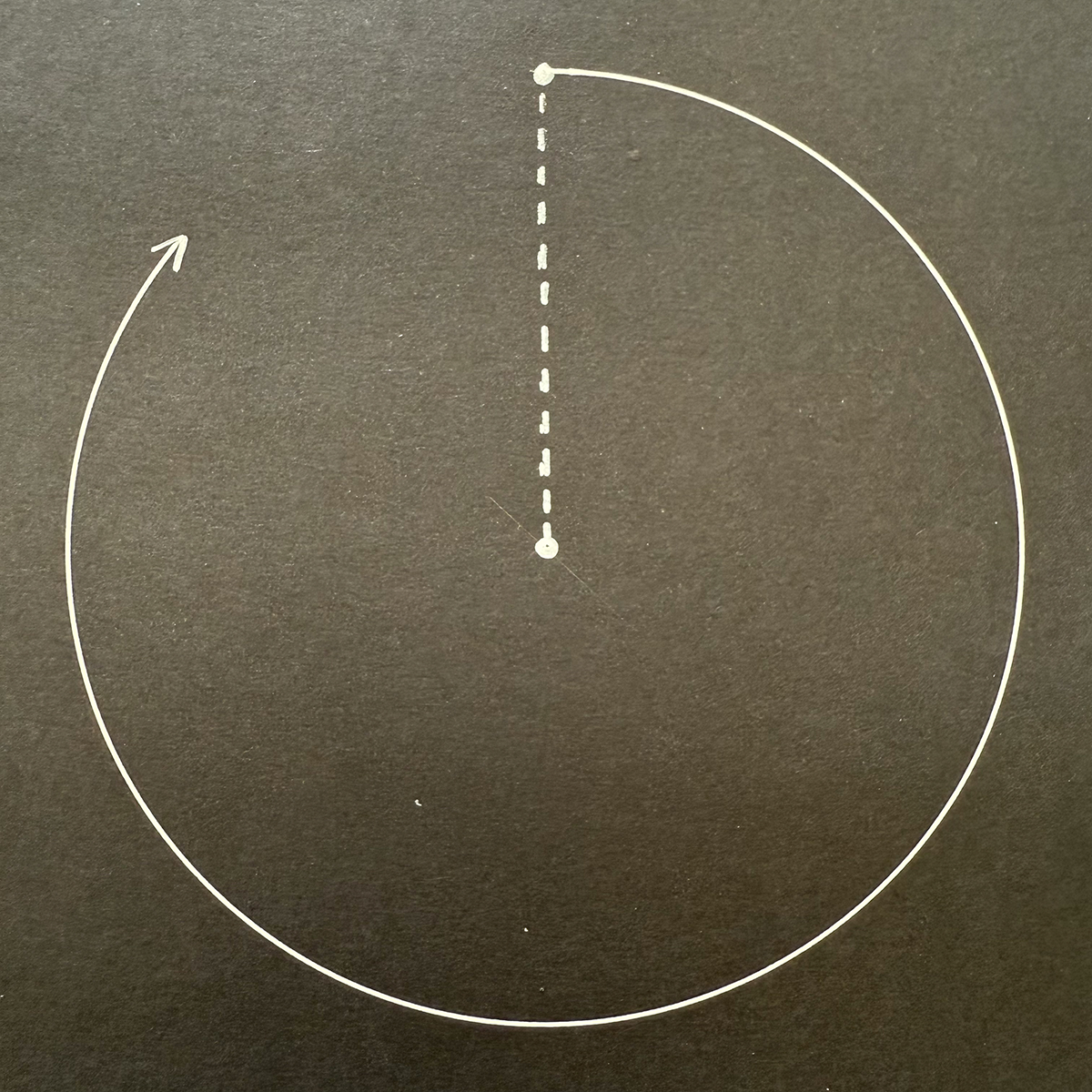
Facts About the Circle:
• A circle is an infinite number of points at an equal distance from the center
• The circumference of a circle is 2πr (the presence of π in the formula makes exact rational calculation impossible)
• Dividing a circle into equal parts produces regular geometric forms
Common symbolic associations across different traditions:
• The impossibility of precisely calculating the circle provides a geometric foundation for understanding it symbolically as immeasurable potential, multiplicity within
• The idea of multiplicity within unity follows from the possibility of constructing an infinite number of regular polygons inside the circle by dividing it into equal parts
• The circle is a symbol of continuity (it has no beginning or end) and has no direction
The circle is not a precise structure, but it is the basis within which precision and structure emerge.
The first closed figure that can be measured precisely is the triangle. At the same time, it is the first two-dimensional figure, the first plane. The geometric facts about the equilateral triangle, as well as the construction of a triangular grid, were covered in the previous article. Here, I would like to focus specifically on the relationship between the circle and the triangle.
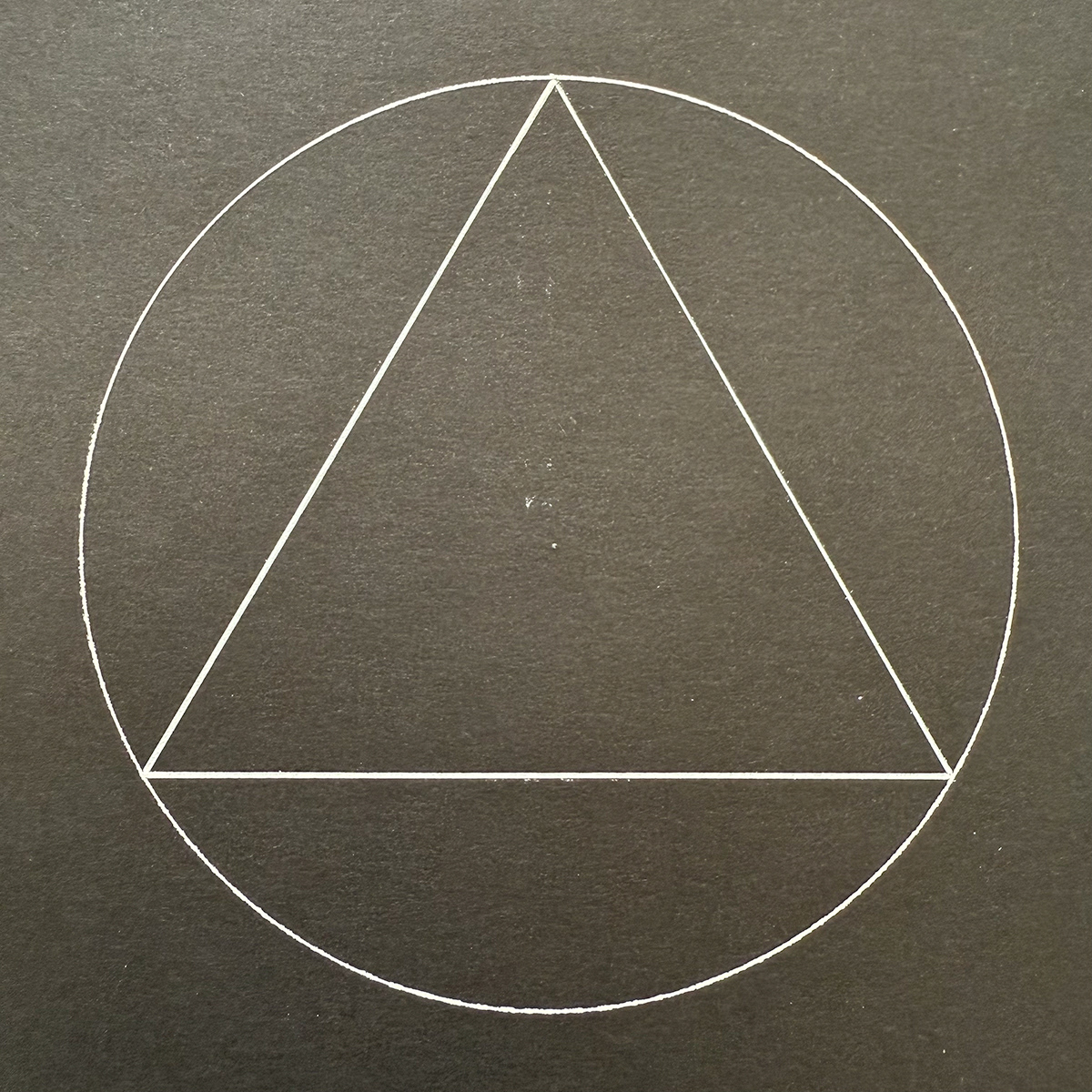
An equilateral triangle can be easily constructed by dividing a circle into three equal arcs. This requires two circles of the same radius, where the center of one lies on the circumference of the other. Connecting the three points completes the construction.
The triangle within the circle is an important symbol — a symbol of beginning and end, the finite contained within the infinite. The triangle has the smallest number of sides a closed figure can have, while the circle, in turn, has an infinite number of sides.
Continuing to examine two intersecting circles, we encounter another symbol known as Vesica Piscis. Within this shape, two equilateral triangles appear — potential before structure, the possibility of expansion. On this basis, a triangular grid can be developed, which underlies mosaics, ornaments, and even architectural construction.
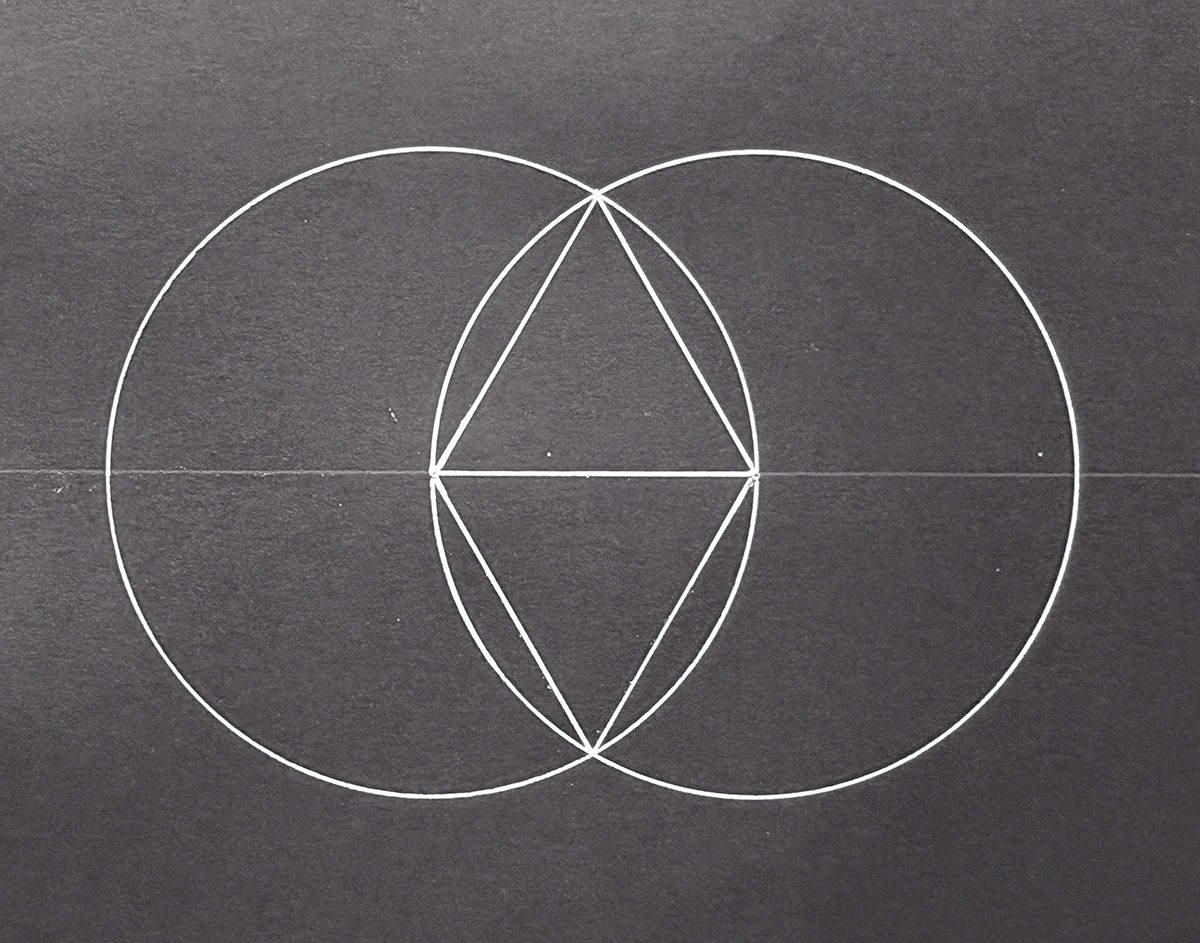
Construction process shown step by step:
Continuing the expansion, we arrive at the Reuleaux triangle. This triangle is formed by the intersection of three circles. It is a convex triangle that acquires properties of the circle — a shape of constant width. While preserving its corners, a rigid form transitions into a flowing one.
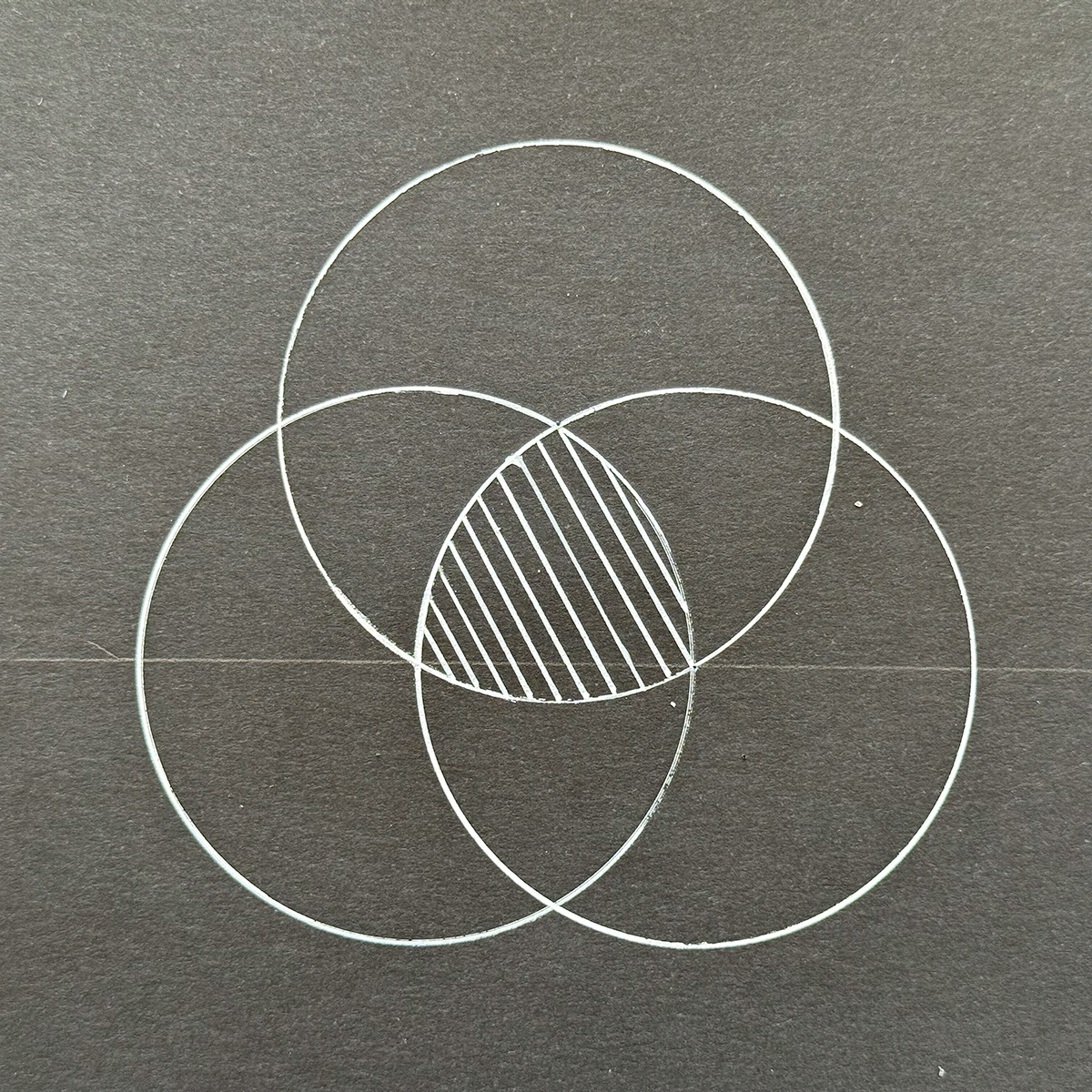
Construction process shown step by step:
The Trefoil (Triquetra) is also constructed from the intersection of three circles. An alternative construction uses arcs drawn from the vertices of an equilateral triangle. The trefoil is a symbol of continuity — movement without beginning or end, unity of three in one — which becomes especially apparent when examining its three-dimensional model (the trefoil knot).
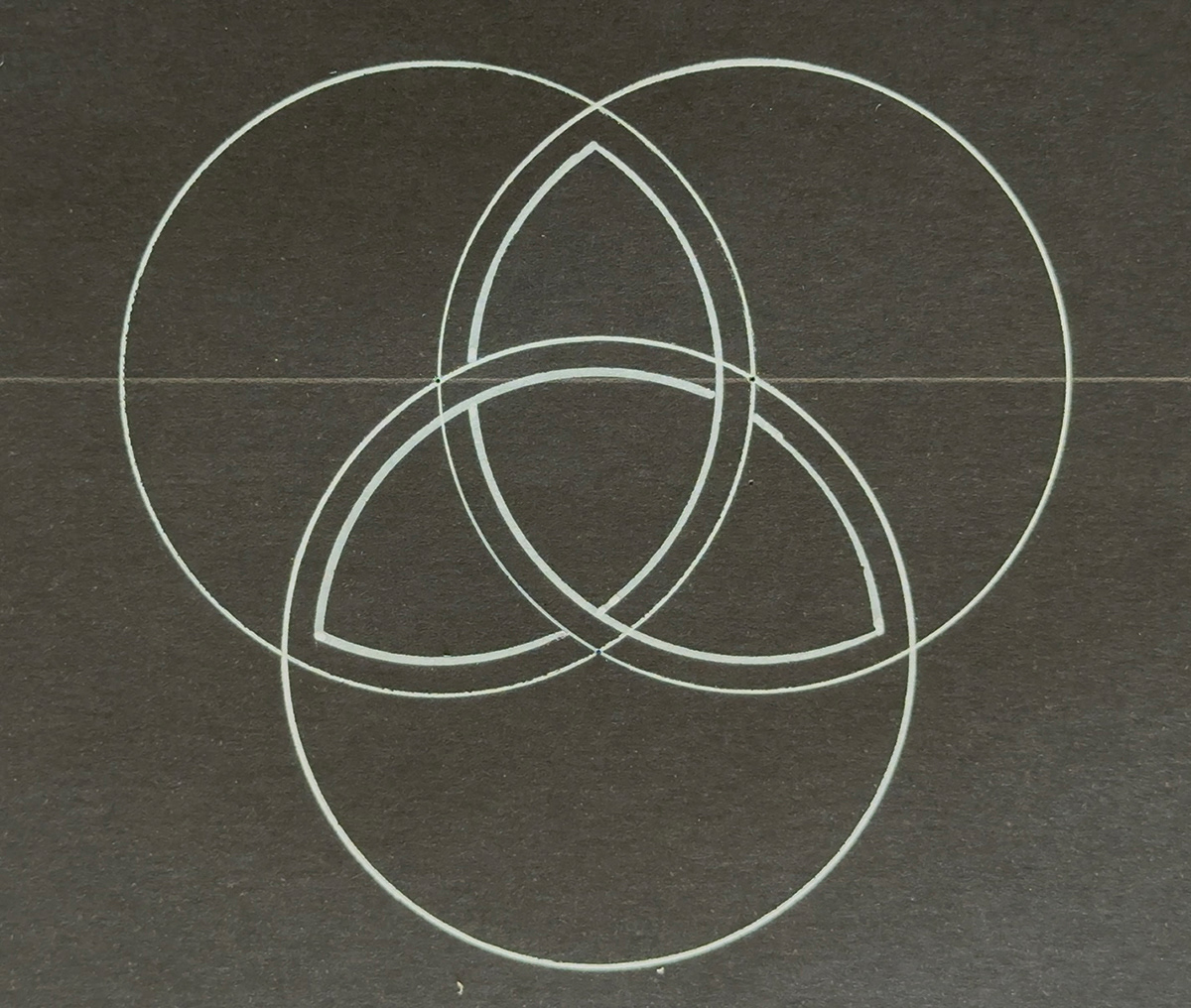
Construction process shown step by step:
Continuing with the trefoil from the perspective of ornamental logic, it is worth mentioning the church trefoil window (Tracery). This ornamental symbol carries the following meanings: light structured by form; spiritual order that allows light to pass through.
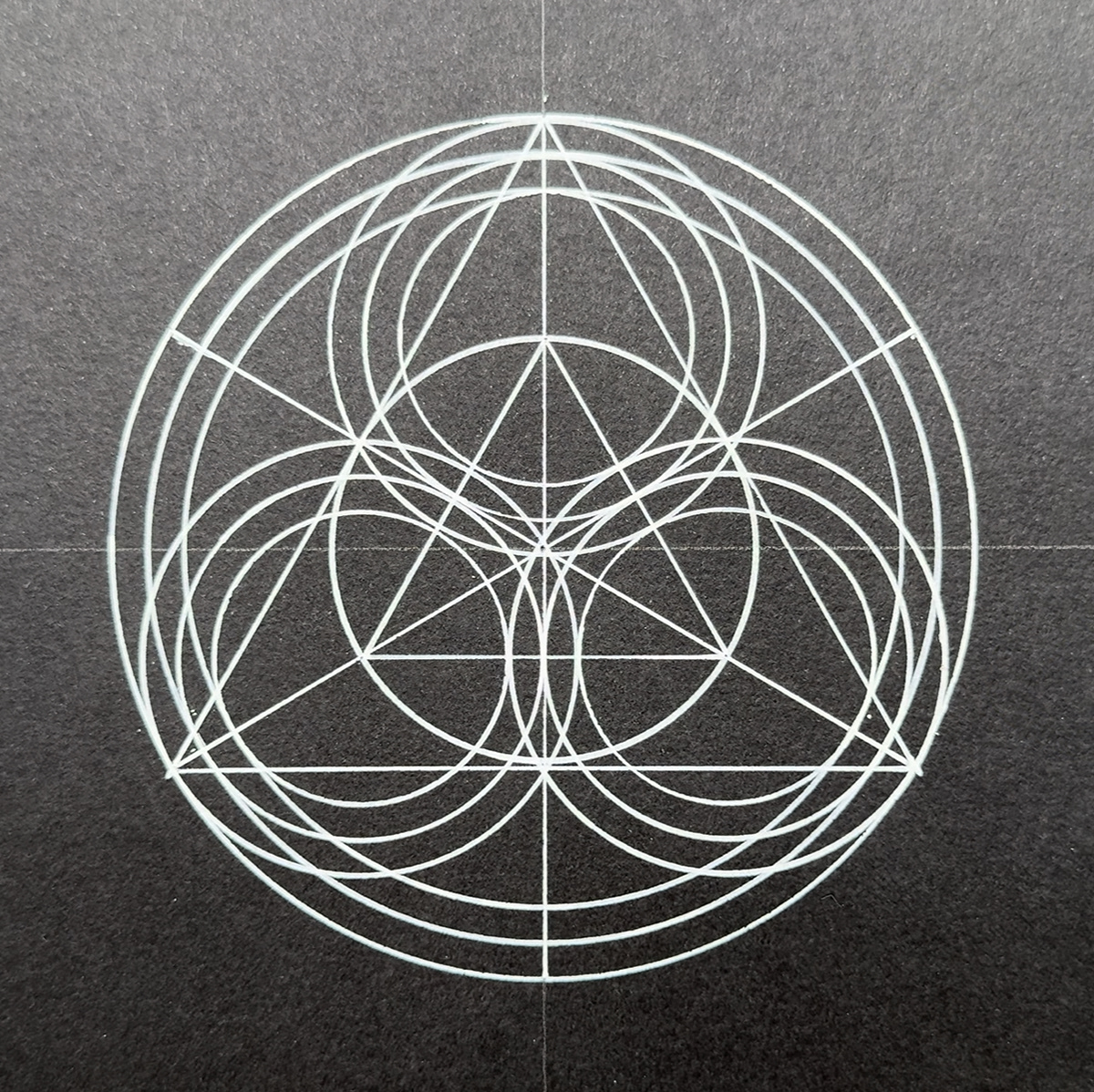
Construction process shown step by step:
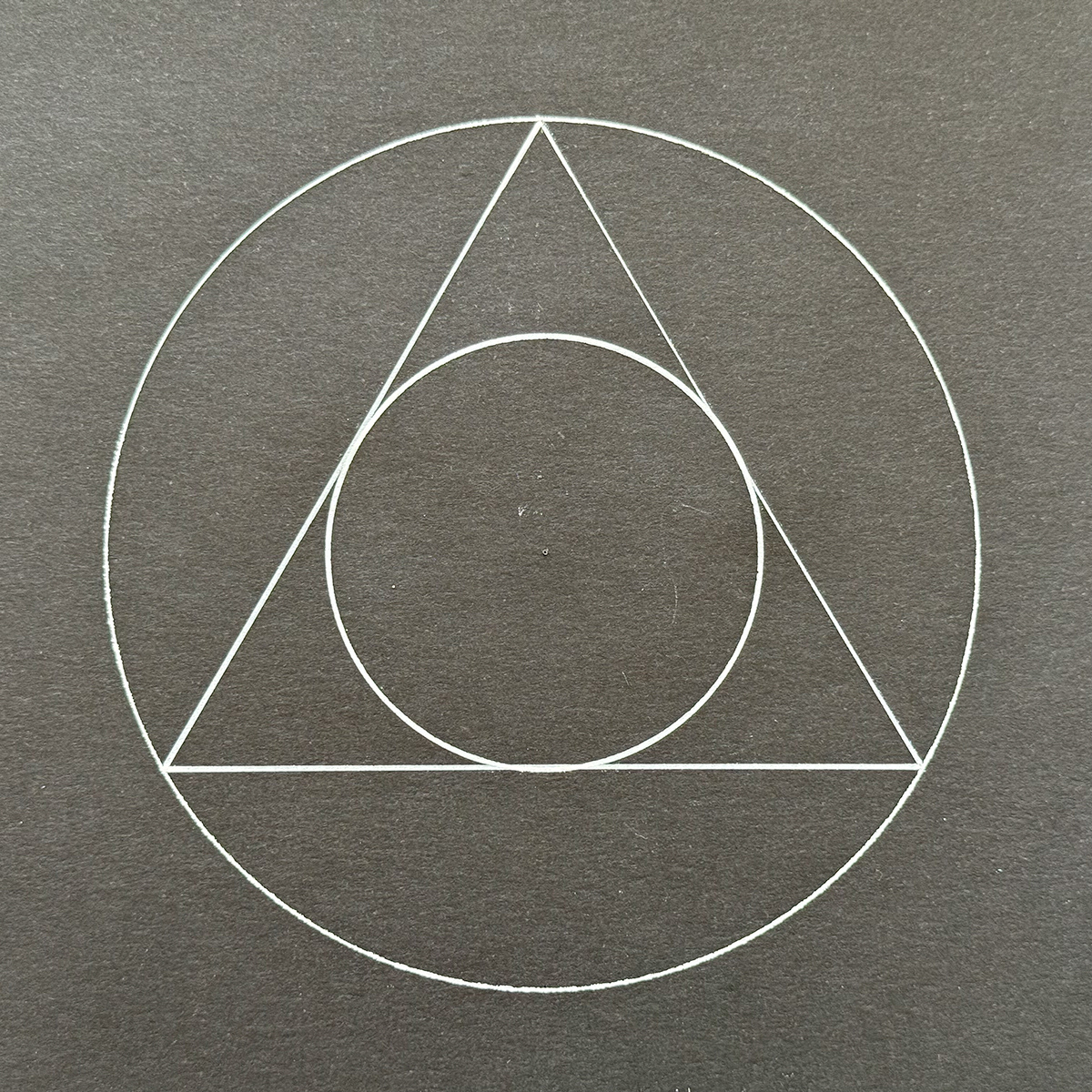
Separately, I would like to note the relationship between the incircle and circumcircle of an equilateral triangle: together they form a visual analogy to a musical octave, where the circumference of the inner circle is half the circumference of the outer one. Incidentally, this structure also appears at the foundation of tracery construction, which can be observed in the previous video.
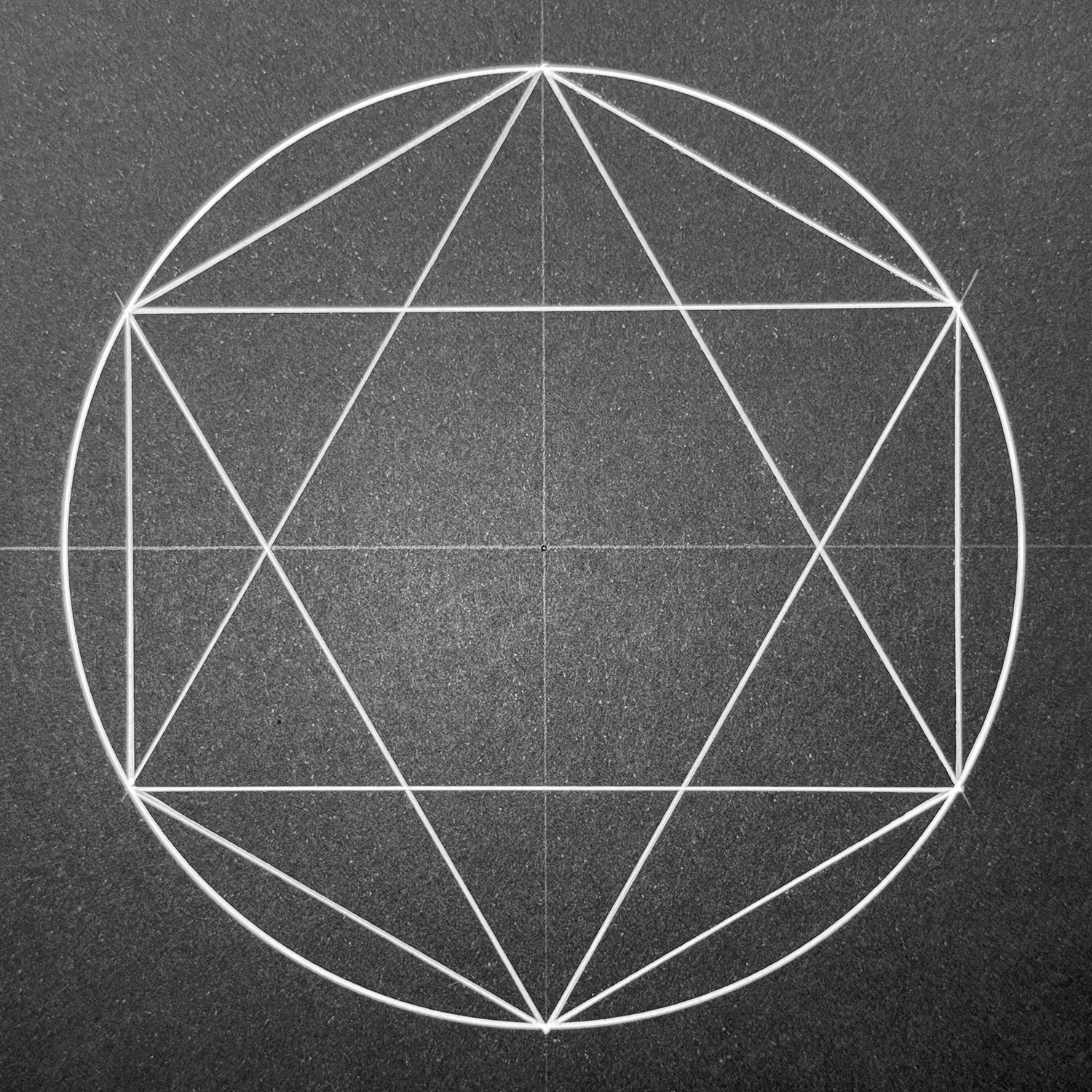
And once again, back to ornament. The intersection of two equilateral triangles (a hexagram) forms a symbol of harmony — the six-pointed star, also known as the Star of David. Its symbolic meaning includes the balance of opposites, active and passive principles, and harmony through symmetry. Two triangles (static and dynamic) divide the circle into six equal parts, once again bringing us back to the circle.
This blog is a personal reference system for geometry, symbolism, and practice.